Everything that’s inside, plainly
This is what the app does today. What’s still to come lives on the Coming up page.
Every day
Home
Today’s lessons on the hour bar, who’s next, what’s missing. Mark done or absent, add a note or plan — without opening anything else.
Pending
Eight different generators build the list by themselves: missing payments, unclosed lessons, incomplete contacts, birthdays, expiring medical certificates, packages running low, inactive students. With WhatsApp messages already written and a snooze button.
Calendar
Day, week and month. A 24-hour no-show rule, and lessons moved from their own sheet.
Lessons
One-to-one, group or clinic, with duration and venue. At the end you log what you did and what’s left.
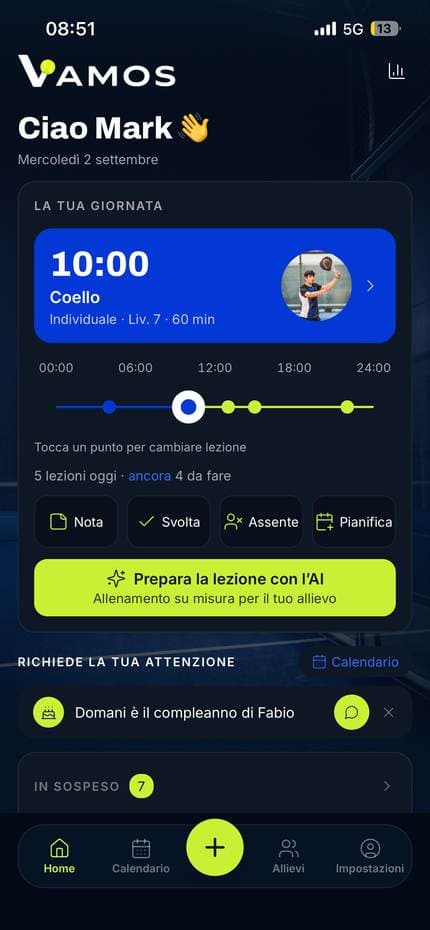
The Home as it really is: your day, the hour bar, what needs attention.
Students
Overview
Contacts, home club, age, level, national ranking, goals. Everything you need before walking on court.
Skill
Six fundamentals from 1 to 10, a Vamos Rating out of 99, the radar, assessment history and up to twenty-eight specific shots for those who want detail.
Lessons and Matches
The history of what you’ve done together — and for those who compete, the matches played.
The student’s web page
A personal link the student opens without downloading anything: rating, progress, remaining sessions, homework. Never prices, never payments. Switch it off whenever you want.
Rating history, on their page
The student doesn’t just see today’s number: they see the curve. March next to September is what brings them back to the page — and to booking.
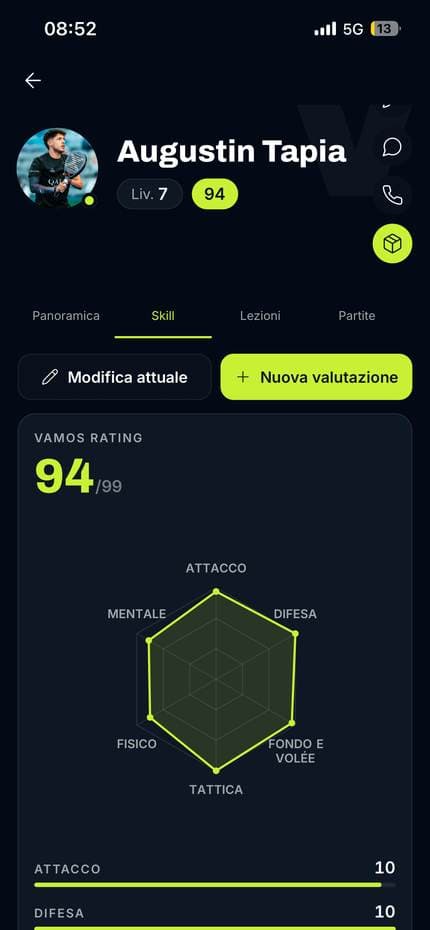
A real student’s skill card: rating 94, radar, six fundamentals.

This is a real student's page, not a mock-up. It opens from a link, in any browser, with nothing to install and no sign-up. Prices and payments appear nowhere on it.
The rating out of 99 and the six strengths, with the date of the last assessment. This is the part they send to their friends.
Sessions left in the package and when it expires, the next lessons with the drills planned, and the button to confirm they're coming.
The money
Prepaid packages
They count themselves down at every logged lesson and warn you before running out.
Cash book
Who’s paid, who hasn’t, what’s come in. With a switch to hide the amounts when someone is looking at your screen.
Stats
Income per hour, occupancy, dead hours, inactive students. From the Pro plan up.
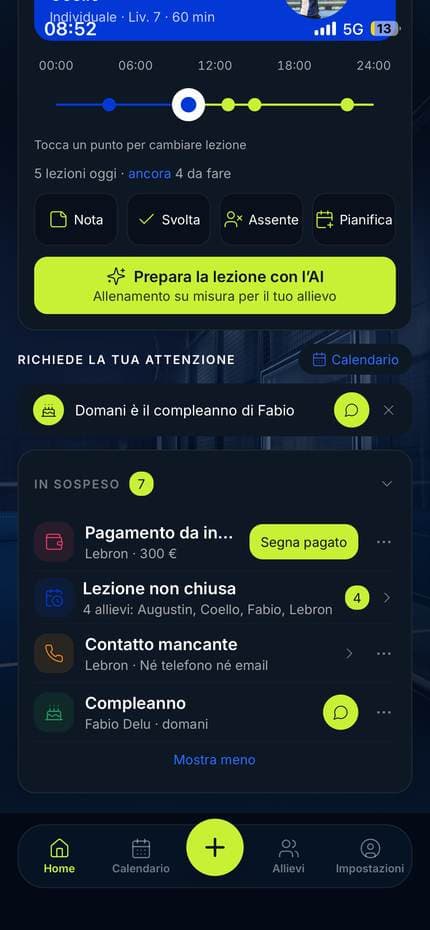
“Payment to collect · Mark paid”: a cash book that keeps itself in order.
Artificial intelligence
Build the lesson with AI
Ask for a session for a student’s level and goals: it arrives split into warm-up, main block and cool-down, each with its duration. Remove what you don’t need, add a drill from the library, and apply it to the lesson.
Ready-made sessions
A library of standard sessions by level, to use without spending credits when nothing bespoke is needed.
Credits, no surprises
Every request costs credits and the balance is always visible: a generated session costs three, an assessment one. They reset every month.
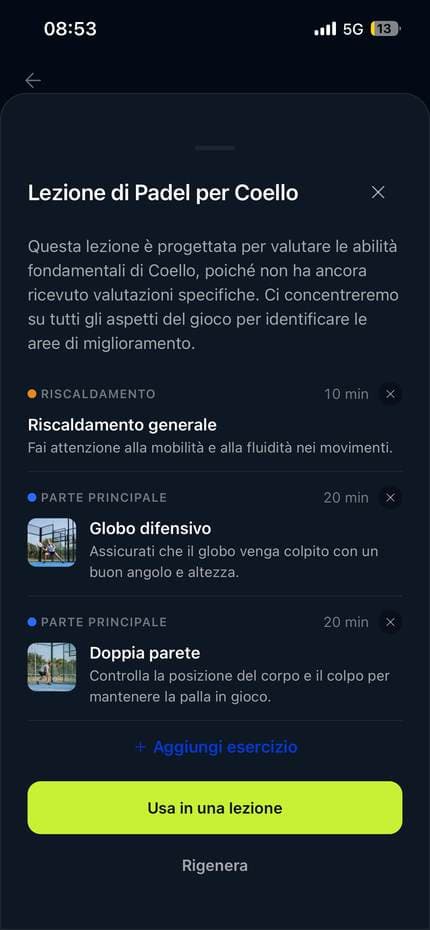
A genuinely generated session: warm-up, main block, “Use in a lesson”.
 Attack
 Defence
 Net
Net Serve
Serve Tactics
 Physical
Twenty-four drills with photos, plus your own. The covers above are the app’s real ones.
The rest
Several clubs
If you teach in two or three places, every lesson knows where it is.
Works offline
Indoor courts often have no signal. The app keeps a copy of lessons, students and packages: you can still read them, and mark done or absent. Everything syncs when the signal returns.
Biometric lock
Face ID or fingerprint on opening: your work’s numbers live in here.
Three languages
Italian, English, Spanish. Padel terms stay in padel.
Higher-plan features stay visible on the free plan, just locked: you know what’s there before paying.
Student count uses active students: at least one lesson logged in the last thirty days.